
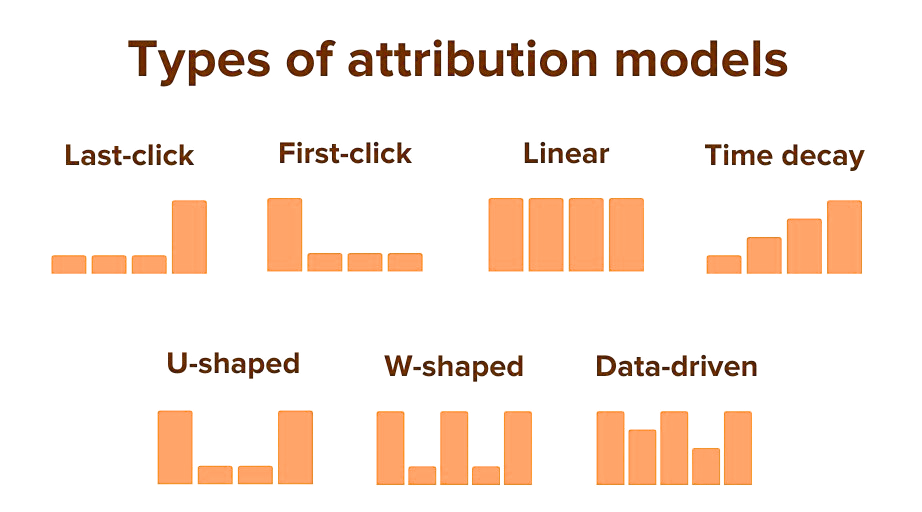
Attribution models in digital marketing determine how credit for conversions is assigned across marketing touchpoints. In the USA market—where buyers interact with multiple channels before converting—choosing the wrong attribution model leads to poor budget decisions, misleading ROAS, and wasted ad spend.
Modern digital marketing strategies rely on accurate attribution to understand which channels influence conversions, not just which channel closes the sale. This is especially critical for businesses running Google Ads, SEO, Facebook Ads, email marketing, and remarketing together.
Without a proper attribution model, even high-performing campaigns can appear unprofitable.
What Is an Attribution Model in Digital Marketing?
An attribution model is a rule-based or data-driven system that assigns conversion credit to different touchpoints a user interacts with before completing a desired action—such as a purchase, lead form, or phone call.
In simple terms, attribution answers this question:
“Which marketing channels actually helped generate this conversion?”
For businesses targeting competitive USA markets, attribution modeling is essential for:
- Measuring real ROI
- Scaling profitable campaigns
- Eliminating low-impact traffic sources
- Improving full-funnel performance
Why Attribution Models Matter for ROI-Focused Businesses
Many advertisers still optimize campaigns using incomplete data. This leads to:
- Overvaluing last-click channels
- Undervaluing SEO, display, and awareness campaigns
- Cutting budgets that actually drive assisted conversions
Proper attribution models help you:
- Allocate budgets intelligently
- Optimize campaigns across the entire funnel
- Improve conversion rate and ROAS
- Build sustainable Digital Marketing Strategies
For any brand aiming to work with the Best Digital Marketer in Bangladesh or a Google Ads Expert in Bangladesh serving USA clients, attribution is the foundation of performance marketing.
Types of Attribution Models Explained Clearly
First Click Attribution Model
First Click Attribution assigns 100% of the conversion credit to the first interaction.
This model is useful when:
- Brand awareness is the primary goal
- You want to measure which channels introduce new users
- Running top-of-funnel campaigns like YouTube Ads or SEO blogs
Limitation:
It ignores all interactions that actually nurture and convert the user.
Last Click Attribution Model
Last Click Attribution assigns full credit to the final touchpoint before conversion.
This model works well for:
- Short sales cycles
- Simple lead generation funnels
- Direct-response campaigns
However, it significantly undervalues:
- SEO
- Display ads
- Remarketing
- Content marketing
This is why many USA advertisers moved away from pure last-click models.
Linear Attribution Model
Linear Attribution distributes equal credit across all touchpoints in the conversion path.
Best suited for:
- Brand-driven businesses
- Subscription models
- Long consideration cycles
While it provides balance, it does not indicate which channels perform better, making budget optimization difficult.
Time Decay Attribution Model
Time Decay Attribution assigns more credit to touchpoints closer to conversion.
Ideal for:
- Promotional campaigns
- Limited-time offers
- Seasonal sales in the USA market
This model recognizes intent progression but still undervalues early-stage discovery channels.
Position-Based Attribution Model
Position-Based Attribution assigns:
- 40% credit to the first interaction
- 40% credit to the last interaction
- 20% shared among middle touchpoints
This model is effective for:
- Lead generation businesses
- B2B funnels
- Multi-channel conversion journeys
It balances awareness and conversion, making it popular among Top Facebook Ads Experts and PPC managers.
Data-Driven Attribution Model (Google Ads)
Data-Driven Attribution (DDA) uses machine learning to analyze real user behavior and assign conversion credit dynamically.
This is the most advanced attribution model and is best for:
- High-conversion-volume accounts
- Scaling Google Ads profitably
- Advanced conversion tracking setups
Requirements:
- Minimum conversion data
- Proper GA4 and Google Ads integration
For USA-focused advertisers, DDA delivers the most accurate insights for ROAS optimization.
Attribution Models in Google Ads: Which One Should You Use?
When to Use Last Click in Google Ads
- Brand keyword campaigns
- Very short buying cycles
- Simple service-based funnels
When to Use First Click in Google Ads
- Brand-building campaigns
- Awareness-focused strategies
- SEO and content-driven growth
When to Use Linear Attribution
- Customer journeys with multiple meaningful interactions
- Equal emphasis on all channels
When to Use Time Decay Attribution
- Flash sales
- Event-based promotions
- Discount-driven campaigns
When to Use Position-Based Attribution
- Lead generation funnels
- SaaS or high-ticket services
- Multi-stage decision processes
When to Use Data-Driven Attribution
- Performance-focused businesses
- Ecommerce brands targeting USA customers
- Businesses scaling aggressively with Google Ads
Common Attribution Mistakes That Kill ROAS
Many advertisers unknowingly sabotage performance by:
- Relying only on last-click data
- Ignoring assisted conversions
- Misinterpreting GA4 reports
- Running ads without full conversion tracking
- Making scaling decisions based on partial data
These mistakes often lead to poor ROI—even when campaigns are technically performing well.
Attribution, Conversion Tracking, and Full-Funnel Optimization
Attribution works best when combined with:
- Proper GA4 setup
- Google Tag Manager implementation
- Server-side tracking
- Accurate conversion events
- Cross-device tracking
This is where experienced professionals stand apart from basic campaign managers.
A Best SEO Expert in Bangladesh or Google Ads Expert in Bangladesh working with USA clients understands attribution as part of a complete growth system, not just a reporting feature.
Frequently Asked Questions (FAQ)
What is the best attribution model for digital marketing?
There is no universal best model. Data-Driven Attribution is ideal for high-volume accounts, while Position-Based works well for lead generation.
Is last-click attribution outdated?
For most businesses, yes. It ignores the customer journey and leads to poor budget decisions.
Does GA4 support attribution modeling?
Yes. GA4 supports multiple attribution models and provides cross-channel insights.
Can attribution improve ROAS?
Absolutely. Proper attribution helps identify profitable channels and scale them efficiently.
Should small businesses use data-driven attribution?
If conversion volume is sufficient, yes. Otherwise, position-based or time decay models work well.
Final Thought: Attribution Is the Difference Between Guessing and Scaling
Attribution models in digital marketing are not optional anymore—especially for competitive USA markets. They define how you understand performance, allocate budget, and scale profitably.
If you want:
- Accurate ROI tracking
- Smarter Google Ads decisions
- Better conversion optimization
- Scalable Digital Marketing Strategies
Working with Asraf Uddin – the Best Digital Marketer in Bangladesh, trusted by USA-focused businesses, ensures your attribution, tracking, and campaigns are built for real growth, not guesswork.